Why Diversification Reduces Portfolio Risk
Spreading money across many investments does not just feel safer: there is a structural reason it lowers risk without necessarily lowering expected return. Here is the intuition.

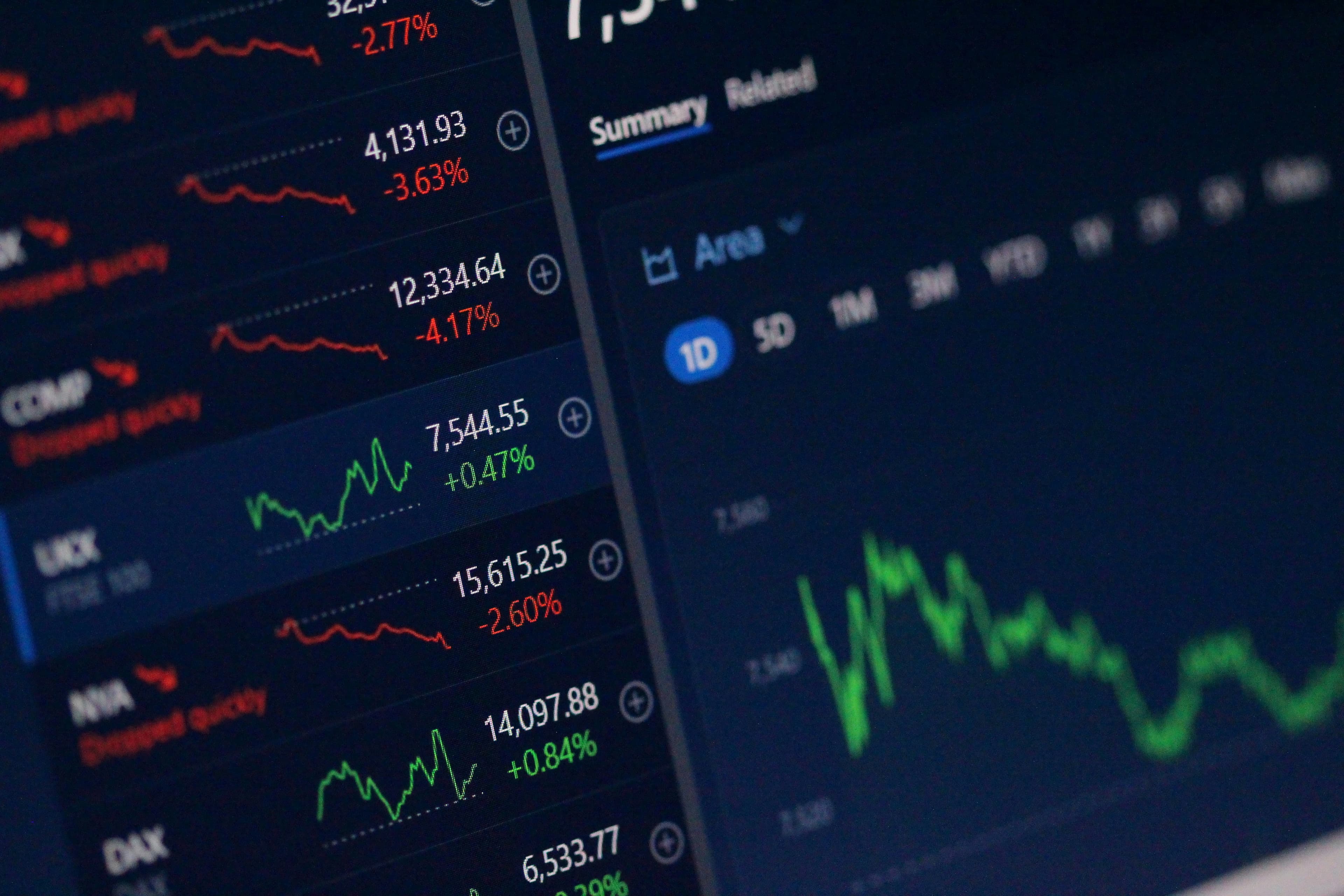
Photo by Vitaly Gariev on Unsplash
"Don't put all your eggs in one basket" is the oldest advice in investing. It is also one of the few ideas in finance that is both genuinely powerful and easy to understand once you see the mechanism behind it.
The two kinds of risk
The risk in any single investment splits into two parts.
Specific risk
Specific risk is the danger tied to one company or one situation: a failed product, an accounting scandal, a factory fire, a lawsuit. It affects that holding and not the wider market.
Market risk
Market risk is the risk shared by almost everything at once: a recession, a sharp rise in interest rates, a broad shift in sentiment. It moves most investments in the same direction at the same time.
The crucial distinction: specific risk can be diversified away, market risk cannot.
Why combining holdings smooths the ride
When you hold many investments whose fortunes are not perfectly linked, their ups and downs partly cancel out. A bad quarter for one company is often offset by a good one elsewhere. The portfolio's overall path becomes smoother than any single holding's path, and importantly, this smoothing does not require you to give up expected return.
The role of correlation
The benefit depends on *correlation*: how closely two investments move together. Combining holdings that tend to move in step (say, two banks) reduces specific risk only a little. Combining holdings that move differently (a bank and a utility, or stocks and bonds) reduces it much more. The lower the correlation, the greater the smoothing.
How much diversification is enough
Most of the benefit arrives faster than people expect. Going from one holding to a handful dramatically cuts specific risk; going from a well-spread portfolio to an even larger one adds progressively less. Beyond a point you are left mostly with market risk: the part diversification cannot remove. That is why even a broadly diversified portfolio still falls in a general downturn.
Diversifying across more than just stocks
Diversification works along several dimensions at once:
- Across companies: many holdings rather than a few.
- Across sectors: so one industry's slump does not sink everything. Income portfolios drift this way easily, because the highest dividend yields tend to cluster in a few sectors.
- Across geographies: different economies on different cycles.
- Across asset types: stocks, bonds, and cash behave differently.
A single broad fund covers the first three of those in one purchase: ETFs vs. index funds compares the two usual wrappers.
What diversification is not
It is not a guarantee against loss, and it will not make you rich quickly from a single winning bet, by design, it dilutes any one position. Its job is to make your outcomes less dependent on being right about any single thing. For most long-term investors, that trade is exactly the right one.
The bottom line
Diversification lowers the risk you are not compensated for taking (the company-specific kind) while leaving your expected return intact. It is the closest thing investing has to a free lunch, which is precisely why it is the foundation of sensible portfolio construction. If you want to see what a spread of payers adds up to in income, the free dividend calculator does the arithmetic.
Frequently asked questions
Does diversification lower my returns?
Not in expectation. It removes company-specific risk you are not rewarded for taking, while leaving your expected return intact. It does cap the upside of any single winning bet.
How many holdings do I need to be diversified?
Most of the specific-risk reduction comes from the first handful of well-spread holdings; the benefit of each additional holding shrinks after that. Spreading across sectors and asset types matters as much as the raw count.
Can diversification protect me in a market crash?
Only partly. It removes specific risk but not market risk, the risk shared by almost everything at once, so a broadly diversified portfolio still falls in a general downturn.
Income ideas, every two weeks.
One short email every other week: a new piece from the Journal and one number worth knowing. No noise, no selling.
Keep reading
All articles →
How to Track Dividend Income: Spreadsheet, Broker or Tracker
Dividend income arrives in small payments, across several accounts, in more than one currency, with tax taken before it lands. Here are the eight numbers worth tracking, the three ways to track them, and where each one breaks down as the portfolio grows.
How Many Dividend Stocks Should You Own? 20 to 30, and Why
Twenty to thirty dividend stocks across at least eight sectors, or fewer on top of a broad ETF core, is the rule of thumb. Here is the reasoning behind it, what one dividend cut costs at each portfolio size, why to weight by income rather than by value, and three shapes that work.

How to Rebalance a Dividend Portfolio Without Paying for It
In an income portfolio, drift shows up in your dividends before it shows up in your portfolio value. Here is how to spot it with a worked example, the three triggers that tell you when to act, and the four ways to rebalance, from the one that costs nothing to the one that costs capital gains tax.